Can ChatGPT Make Videos? Not Anymore, and Here's What Changed
Can ChatGPT make videos?
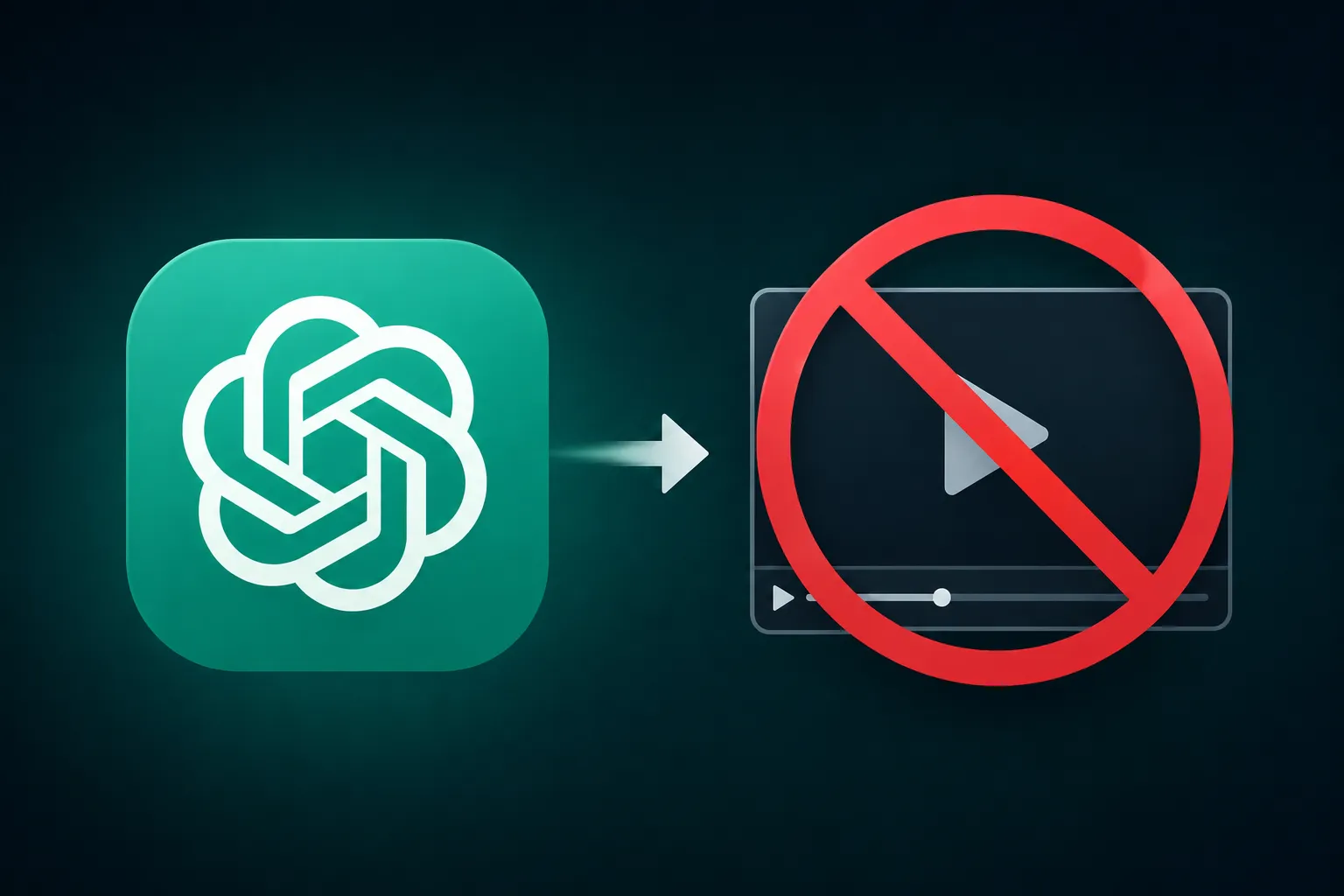
If you're looking for the can chatgpt make videos, you're in the right place. No. ChatGPT generates images, not video. OpenAI's own Capabilities Overview lists every tool it has, and video generation isn't one of them. Sora, the OpenAI product that did make video, shut its web and app experiences down on 26 April 2026, with the API following on 24 September. There's no hidden button.
That's a more useful answer than it looks, and it's not the answer you'll get from most of the results above this one. Four of the ten pages ranking for this question are video tool vendors, and their answer is a version of "no, but ours can". One of them is literally titled that way.
So here's the honest shape of it. ChatGPT does the writing that decides whether a video is worth watching: the hook, the script, the scene breakdown, the voiceover direction, the captions. Then something else renders pixels. Those are two different jobs, and conflating them is why people keep looking for a ChatGPT video generator that was never there.
The pre-production half is where videos are won or lost. Nobody has ever sat through a beautifully rendered video with a bad first three seconds. That half is text. Which happens to be the one thing ChatGPT is unambiguously good at, and the reason this question has a more useful answer than "no".
One test, and it applies to every prompt below as much as to anything else you find. Can you change a single thing in it and predict what happens? If not, you don't have a prompt. You have a paragraph that produced one good result once, and most of what circulates as ai video script prompts is exactly that, which is why it stops working the moment your topic shifts.
Key takeaways
- ChatGPT can't generate video. It generates images, and the Capabilities Overview confirms that.
- Sora's app closed on 26 April 2026; the API closes on 24 September 2026. Export at sora.chatgpt.com/sunset before it goes.
- What ChatGPT does do is every pre-production step: hook, script, scene list, voiceover, music brief.
- Judge a video prompt by whether you can change one variable and predict the result. Most can't be.
What happened to Sora
Sora was OpenAI's text-to-video model, and for about eighteen months it was the reason "can ChatGPT create videos from text" had a complicated answer. That's why chatgpt for video scripts matters here. It doesn't anymore. OpenAI's help centre states that the Sora web and app experiences were discontinued on 26 April 2026, and that the Sora API will be discontinued on 24 September 2026.
If you made anything in it, go get it now. You can export your content at sora.chatgpt.com/sunset by clicking Export, and you'll get an email when the file is ready. After the shutdown and any final export window, OpenAI says it will permanently delete data associated with your use of Sora. Permanently is doing real work in that sentence.
For can chatgpt make videos, one small mercy: any purchased ChatGPT or Sora credits can still be used for Codex, so the money isn't stranded.
Worth saying plainly, because half the internet hasn't caught up. Most listicles answering this question were written while Sora was alive and quietly still say so. If a page tells you to open Sora inside ChatGPT and it doesn't carry a date, treat everything else on it with the same suspicion.
The part ChatGPT actually does well
Short video lives or dies in the first three seconds, and that's a writing problem. You need a line that stops a thumb, and you need about fifteen of them because most won't work.
The useful option here is hook-style. Set it to shocking statistics and you get openers built around a number; switch to myth-busting reveals and the same topic comes back as a correction of something the viewer believes. Those pull completely different audiences, which is why generating both and testing beats picking one. Quantity matters too: ask for 5 quick options and you'll ship the first decent one, ask for 20 extensive variety and you start seeing the pattern in which hooks work for your topic.
Problem-Agitate-Solve is the oldest structure in direct response, and it survives the jump to video intact. What makes this one worth keeping is agitation-style. Empathetic sits beside the viewer's problem; contrarian tells them the thing they've been doing is the problem. Same framework, and the second version will get you comments while the first gets you saves. Pick deliberately rather than letting the model choose for you.
Scripts and structure that survive the edit
A script that reads well and shoots badly is the most common failure in this whole workflow. The fix is asking for a scene breakdown instead of prose, so you find the problems at the writing stage rather than in the timeline.
This one returns scenes with voiceover and visual direction attached, which is what turns a script into a shot list. The video-length option is the one to move first. A 30-seconds setting forces roughly three beats and cuts everything that isn't the story; 3-minutes gives you room for setup and payoff. Choosing the length before you write is the difference between editing and rewriting. Story-theme changes the register too, so a true-crime-mystery brief and a scientific-discovery brief produce genuinely different pacing.
Long form is a different animal. Retention is the metric, and retention is structural. Setting video-duration to 10-15-minutes produces a tighter chapter map than 40-60-minutes, which builds in the recaps and pattern breaks a longer watch needs. Pair it with content-format: step-by-step-tutorial gives you a linear spine, while case-study-analysis gives you a narrative one. If you've already got a video you admire, reverse-engineering the prompt behind it is a faster way in than starting from a blank page.
Unboxing has its own grammar. The viral-element option is the whole lever: surprise reveal builds to a single moment, comparison test sustains tension across the runtime, and educational twist gives people a reason to send it to someone. Set product-type honestly, because a beauty product script and a gaming accessory script differ in pacing more than in vocabulary.
Voice, music and the finishing pass
Most people stop at the script. That's why most AI-assisted video sounds like a script being read, which is a different thing from a video.
What makes this one useful is that it returns performance direction alongside the words, so whoever records it, human or synthetic, knows what to do. Delivery-style is where you steer: conversational friendly and authoritative expert produce different sentence lengths, not just different tone, because the prompt writes to the delivery. Match target-audience honestly and the vocabulary follows.
And you can brief music the same way you brief a voice. Instrumentation is the option that changes the most: minimal piano and percussion heavy produce different edits, because the music dictates where your cuts land. Set mood to haunting and the composition blueprint comes back with space in it; set it to victorious and it fills that space. You're not composing here, you're writing something a composer or a generator can act on.
Series work is underrated. A single video has to earn attention from scratch, while episode four borrows it from episode three, and that borrowed attention is the closest thing to a free lunch in this whole business. Episode-format decides everything downstream: 30-second-micro-episodes and 5-minute-investigation demand completely different cliffhangers. Series-concept sets how much you have to explain up front, since unsolved-mysteries arrives with its own conventions while science-experiments has to teach before it can pay off. The discipline behind prompts for viral YouTube videos applies here too, stretched across a run instead of packed into one upload.
Where the video actually gets made
You still need something that renders. Broadly there are three kinds of tool, and knowing which kind you want saves a lot of trial subscriptions. Text-to-video generators build footage from a description. Avatar platforms put a synthetic presenter in front of your script. Timeline editors with AI features assemble stock and your own clips faster than doing it by hand. Which one you need is decided by your script, which is why the script comes first.
Whichever you land on, the prompt you hand it is a different animal from every prompt above. This is especially true for can chatgpt make videos. A renderer doesn't want a document. It wants one shot, described precisely enough that there's nothing left to guess.
Notice what this one doesn't do: name a tool. Camera-move carries more weight than any other option here, because a renderer treats camera motion and subject motion as separate problems, and "pushes slowly forward through open air" gets you a usable take where "cinematic drone shot" gets you a coin flip. Grade is the other lever worth learning by name. The gap between natural documentary neutral and vintage 16mm with grain and halation is the gap between footage you can cut into a sequence and footage that only ever works alone. There are around fifty more of these in the video generation prompts collection.
The other question people arrive with is whether any of this is free. ChatGPT has a free tier, and it'll write hooks, scripts and shot lists on it all day. Rendering is where the money goes, usually priced per minute of finished output or as a monthly seat, and that's true whichever of the three categories you end up in. Budget for the render, not for the writing.
A practical note on order of operations, because getting this backwards costs the most time. Write the script, then read it aloud with a timer running. A 60-second script is roughly 150 spoken words, and almost every first draft comes in over. Cutting on the page takes minutes; discovering it in a timeline after you've paid to render it takes an afternoon.
One more thing worth knowing while you're here: ChatGPT does generate images. The Capabilities Overview says you can ask it to produce illustrations, mockups or creative visuals from text, and modify them in plain language, which covers thumbnails and storyboard frames without opening anything else. If you want that to work reliably, the four-part structure behind an image prompt transfers straight across.
Every prompt on this page lives on PromptCreek with its options already set up, so you change the hook style or the episode format from a dropdown instead of retyping the brief. The ChatGPT prompts collection is where I'd start if you want more of them. But the habit that actually improves your videos isn't collecting prompts. It's writing the script before you shop for the tool, because the tool was never the reason the last one didn't work.
Frequently asked questions
Can ChatGPT create videos from text?
No. It creates text and images from text. Sora was OpenAI's text-to-video model and its app was discontinued on 26 April 2026, with the API closing on 24 September. What ChatGPT can do from a text prompt is write the script, break it into scenes, and draft the voiceover direction, then you take that to a tool that renders footage.
What is the best AI for creating videos?
Depends entirely on what you're making, and anyone naming one tool is selling it. Text-to-video generators suit short abstract footage. Avatar platforms suit training and explainer content where a presenter helps. Timeline editors with AI features suit anything using your own clips. Write the script first, then pick, because the script tells you which of the three you need.
Is ChatGPT video AI free?
The question has a false premise, since ChatGPT has no video generation to charge for. ChatGPT itself has a free tier that will happily write scripts, hooks and shot lists. Rendering costs money on essentially every platform that does it, usually per minute of output or as a monthly plan, and that's the cost that matters in this workflow.
Can any AI generate videos?
Yes, several can, and the field moves fast enough that a specific recommendation ages badly. What doesn't age is the workflow: script, scene breakdown, voiceover direction, then render. Every tool in this category takes some version of that input, so the pre-production work you do in ChatGPT transfers even when you switch platforms, which happens more often than anyone expects.
Prompts in This Article
Try these prompts mentioned above — click to view full details.
Viral TikTok Hooks Generator
Generate attention-grabbing opening hooks for viral TikTok and short-form video content
Problem-Agitate-Solve Content Script
Create persuasive social media content using classic Problem-Agitate-Solve psychology framework that drives action and conversions.
Faceless Video Story Creator with Scene Breakdown
Generates complete faceless video stories with detailed scene descriptions, voiceover scripts, and animation instructions for each segment, perfect for YouTube storytelling and social media content.
Trending Prompts
Comprehensive GTM Strategy Builder
Transform your product launch into a strategic success with this comprehensive go-to-market framework. This prompt generates detailed, actionable GTM strategies covering market analysis, positioning, pricing, distribution, and launch execution plans tailored to your specific product and market conditions.
LinkedIn Engagement Post Generator
Creates compelling LinkedIn posts optimized for audience engagement, profile growth, and professional networking. This prompt generates posts that encourage meaningful interactions through questions, insights, and valuable content while maintaining a professional yet personable tone.
Fashion Editorial Photography Prompt
Creates hyperrealistic editorial fashion photographs with authentic skin texture, premium fabric details, and cinematic lighting. Perfect for high-end fashion shoots and editorial styling.
Ready to level up your prompts?
Explore 51+ chatgpt video generator prompts for ChatGPT, Claude, Midjourney, and more on PromptCreek.