AI Prompt for Creating Viral Videos on YouTube: The Complete Guide
Why Most YouTube AI Prompts Fail to Generate Viral Content
The problem isn't that creators don't use AI. It's that they use it wrong. Most people type "create a viral YouTube video about cooking" into ChatGPT and wonder why their content gets 200 views instead of 200,000. The difference between viral and invisible comes down to prompt engineering, not the AI tool itself.
Viral videos follow patterns. They hook viewers in the first three seconds, maintain tension throughout, and trigger specific psychological responses. When you understand these patterns, you can craft an AI prompt for creating viral videos on YouTube that consistently produces content people can't stop watching.
The creators getting millions of views aren't just lucky. They're using systematic approaches to prompt engineering that most people never learn. Here's how to build that system.
The Anatomy of a Viral Video Prompt
Effective YouTube video prompts contain five elements that work together. Miss any one of them and your content becomes forgettable background noise.
Hook Psychology
Your prompt must specify the exact psychological trigger for the opening. "Create an engaging intro" produces generic content. "Open with a shocking statistic that contradicts common belief about [topic]" gives the AI a specific pattern to follow. The best hooks create cognitive dissonance—they present information that doesn't match what viewers expect.
Retention Mechanisms
YouTube's algorithm rewards watch time above everything else. Your prompt needs to build in pattern interrupts, cliffhangers, and curiosity gaps. Instead of "make it interesting," specify "include a teaser at 30 seconds about the surprising twist coming later" or "pause the explanation halfway through to address a common objection."
Visual Direction
Even text-based AI prompts should include visual cues. Describe camera angles, lighting, and scene composition. This helps when you're generating video scripts that will be produced later. "Close-up shot of hands demonstrating the technique" is more actionable than "show the process."
Emotional Arc
Viral content takes viewers on an emotional journey. Your prompt should map this arc: curiosity to surprise to satisfaction. Specify the emotional beats: "Build tension around the problem, create anticipation for the solution, deliver a satisfying resolution with a twist."
The key is being specific about the emotional progression, not just the content topics. This is where most ChatGPT prompts for YouTube videos fall short—they focus on information delivery instead of emotional engagement.
Engineering Hooks That Stop the Scroll
The first three seconds determine everything. YouTube's data shows that videos losing viewers in the opening moments rarely recover, regardless of content quality. Your AI prompt needs to engineer hooks that create immediate psychological investment.
Pattern interrupts work because they violate expectations. Instead of prompting for "an interesting opening," try: "Start with a statement that sounds completely wrong but is actually true. Build curiosity around why this counterintuitive fact exists." This gives the AI a specific psychological framework to work within.
Question-based hooks work when they tap into existing viewer concerns. "What if everything you know about [topic] is backwards?" creates more engagement than "Today we're talking about [topic]." The difference is specificity in the psychological trigger you're targeting.
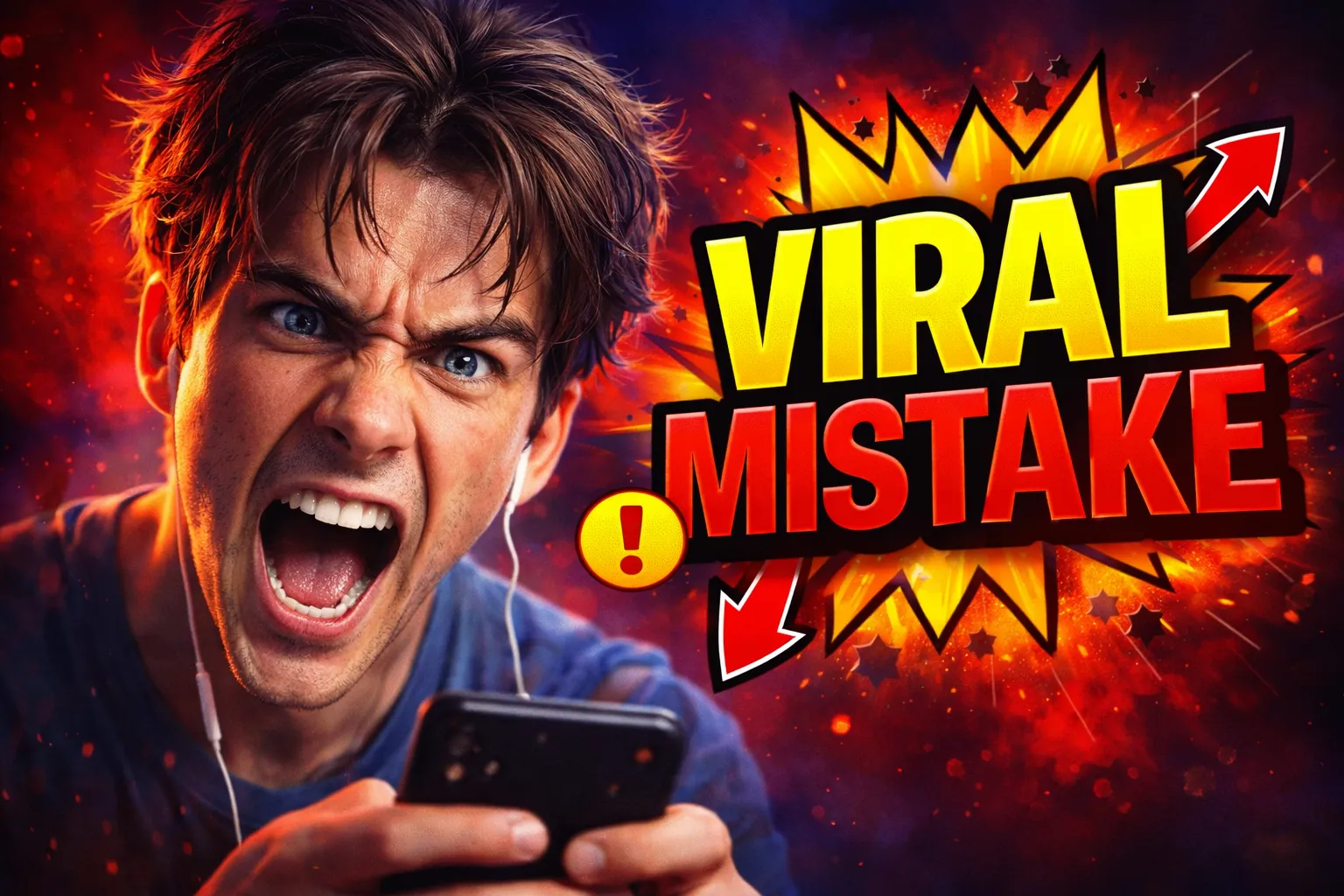
Visual hooks matter just as much as verbal ones. When crafting prompts for video thumbnails, specify the exact emotional expression and composition that will make viewers pause their scrolling.
Structuring Long-Form Content for Maximum Retention
YouTube rewards videos that keep people watching. The platform's algorithm heavily favors content with high average view duration, making retention the most important metric for viral potential. Your AI prompts need to build retention strategies directly into the content structure.
The traditional introduction-body-conclusion format kills retention. Instead, prompt for a structure that creates multiple curiosity loops. "Introduce three surprising facts in the opening, then address each one at different points throughout the video, building to the most shocking revelation at the end."
Pacing matters more than most creators realize. Prompt for specific timing: "Include a pattern interrupt every 45-60 seconds" or "Introduce a new visual element every 30 seconds to maintain visual interest." This level of detail helps AI generate content that feels professionally produced.
The best long-form YouTube content feels like a conversation, not a lecture. When prompting for scripts, specify conversational elements: "Include rhetorical questions that viewers would actually ask" or "Add natural pauses where viewers might want to comment."
Optimizing AI Prompts for Different Content Types
Educational content, entertainment, and product reviews require different prompt strategies. The psychological triggers that work for tutorial videos won't necessarily work for reaction content or vlogs.
Educational Content
Learning-focused videos need prompts that balance information density with engagement. "Explain [concept] using the analogy method: compare complex ideas to familiar experiences, then build complexity gradually" works better than "explain [concept] clearly." The specificity helps AI create content that actually teaches instead of just informing.
Entertainment and Reaction Content
Entertainment prompts should focus on personality and authenticity. "React to [content] with genuine surprise, then analyze why it's effective using your expertise in [field]" gives the AI a framework for creating authentic-feeling responses. The key is prompting for specific emotional responses rather than generic reactions.
Product Reviews and Demonstrations
Review content needs prompts that build credibility while maintaining engagement. "Test [product] in three real-world scenarios that viewers actually care about, focusing on practical outcomes rather than technical specifications" creates more engaging content than feature-by-feature comparisons.
For creators looking to streamline their content production, the creative entertainment prompts collection includes templates specifically designed for different YouTube content formats.
Thumbnail and Title Optimization Through AI
Thumbnails and titles work together as a psychological unit. Your AI prompt for creating viral videos on YouTube should address both elements simultaneously, not separately. They need to create a curiosity gap that only watching the video can resolve.
Effective thumbnail prompts specify exact visual elements: "Create a thumbnail showing [subject] with an expression of genuine surprise, using high contrast colors that pop against YouTube's white background." The specificity helps whether you're generating the thumbnail directly or briefing a designer.
Title prompts should focus on psychological triggers rather than keyword stuffing. "Create a title that makes viewers feel like they're missing out on secret information" produces better results than "create an SEO-optimized title." The emotional trigger drives clicks; SEO just helps with discovery.
The best titles create cognitive dissonance. They present information that seems contradictory or unexpected. "I tried [popular method] for 30 days and here's why it failed" works because it violates the expectation that popular methods work well.
Scaling Content Production with AI Prompt Templates
Once you've identified what works, you need systems to replicate success. The most successful YouTube creators using AI don't write new prompts for every video—they use tested templates with variables they can customize.
Template-based prompting looks like this: "Create a [content type] video about [topic] that opens with [hook type], includes [retention mechanism] at the 2-minute mark, and concludes with [specific CTA]." The brackets become variables you fill in based on your specific video topic.
This approach lets you maintain consistency while adapting to trending topics. You're not starting from scratch each time; you're applying proven formulas to new subjects. The video generation prompts in our collection use this template approach for scalable content creation.
Batch creation becomes possible when you have solid templates. You can generate scripts for multiple videos in one session, then produce them efficiently. This is how creators maintain consistent upload schedules while using AI to enhance rather than replace their creative process.
Measuring and Iterating on AI-Generated Content
The best AI prompts evolve based on performance data. YouTube Analytics tells you exactly where viewers drop off, which segments they rewatch, and what drives the most engagement. Use this data to refine your prompts for better results.
If viewers consistently drop off at the 2-minute mark, your prompt needs better retention mechanisms at that timestamp. If comments spike during certain segments, identify what your prompt did right and replicate it. The feedback loop between AI output and audience response is where viral content gets engineered.
A/B testing works with AI-generated content too. Generate multiple versions of hooks, titles, or thumbnails using slight prompt variations, then test them against each other. The winning elements become part of your template library for future videos.
Track metrics that matter: average view duration, click-through rate, and engagement rate. These numbers tell you whether your AI prompts are creating content that actually connects with audiences, not just content that sounds good on paper.
The most successful creators treat AI as a creative partner, not a replacement for strategy. They use data to inform their prompts, then use refined prompts to create better content. For more advanced prompting techniques and tested templates, explore the full prompt collection to find strategies that match your content style and audience.
Prompts in This Article
Try these prompts mentioned above — click to view full details.
YouTube Shorts Viral Hook Generator with Retention Strategy
Creates compelling opening hooks and retention strategies for YouTube Shorts that maximize watch time and viral potential through psychological triggers and engagement patterns.
Long-Form YouTube Video Structure with Audience Retention
Designs comprehensive video structures for 10-60 minute YouTube videos with strategic pacing, retention hooks, and engagement patterns that maintain viewer attention throughout extended content.
Viral YouTube Thumbnail Design Generator with Click Psychology
Creates high-converting YouTube thumbnail designs using psychological triggers, color theory, and platform best practices to maximize click-through rates and video discovery.
Trending Prompts
Comprehensive GTM Strategy Builder
Transform your product launch into a strategic success with this comprehensive go-to-market framework. This prompt generates detailed, actionable GTM strategies covering market analysis, positioning, pricing, distribution, and launch execution plans tailored to your specific product and market conditions.
LinkedIn Engagement Post Generator
Creates compelling LinkedIn posts optimized for audience engagement, profile growth, and professional networking. This prompt generates posts that encourage meaningful interactions through questions, insights, and valuable content while maintaining a professional yet personable tone.
Fashion Editorial Photography Prompt
Creates hyperrealistic editorial fashion photographs with authentic skin texture, premium fabric details, and cinematic lighting. Perfect for high-end fashion shoots and editorial styling.
Ready to level up your prompts?
Explore 51+ Marketing prompts for ChatGPT, Claude, Midjourney, and more on PromptCreek.