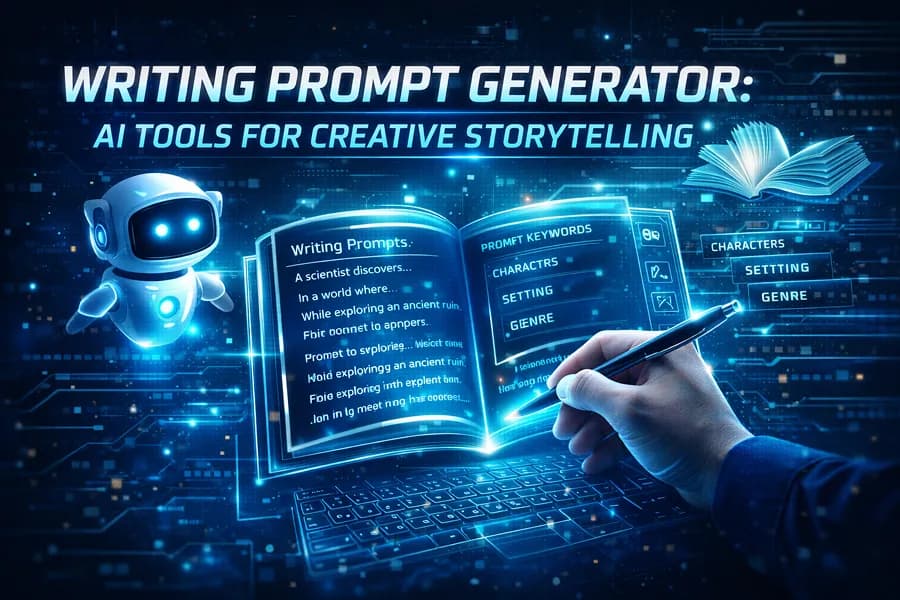
Writing Prompt Generator: Beyond Random Ideas to True Creativity
Beyond Random: The Problem with Basic Writing Prompt Generators
You've probably tried them. Those random prompt generators that spit out combinations like "write about a sad vampire in a coffee shop" or "magical forest meets modern technology." They feel like someone dumped a bunch of word magnets in a bag and shook it up.
Here's the thing: basic writing prompt generators are just digital mad libs. They pull from preset lists of adjectives, nouns, and scenarios, then mash them together. Sure, you might get "steampunk detective solves murder in underwater city," but you'll also get a thousand variations that sound exactly the same.
The problem isn't randomness itself.
It's shallow randomness. These tools don't understand story structure, character psychology, or what makes a premise actually compelling. They're like giving someone a box of crayons and saying "make art" without teaching them about color theory.
Most writers end up scrolling through dozens of generated prompts, hoping something will spark. When everything feels generic, nothing feels special. You need prompts that don't just combine random elements — you need ones that understand why certain combinations work and others fall flat.
That's where AI-powered writing prompt generators change the game entirely.
AI Prompt Generators: Sparking True Creativity
Real AI prompt generators don't just shuffle words. They analyze patterns across thousands of successful stories, understanding what makes opening lines grab readers or what character combinations create natural conflict.
Think about it like this: a basic generator might suggest "write about a robot who wants to be human." An AI generator that actually understands storytelling might suggest "write about a maintenance robot who discovers they've been unconsciously mimicking the emotional patterns of the humans they observe, but only realizes this when those humans disappear."
The difference? The AI version includes psychological depth, built-in conflict, and a hook that immediately raises questions. It's not just combining concepts; it's engineering narrative tension.
Modern AI algorithms can identify what makes certain story elements work together. They recognize that internal conflict drives character development, that specific details feel more authentic than generic ones, and that the best premises contain inherent contradictions that force characters to make difficult choices.
These tools can also adapt to different creative mediums and genres. A prompt for literary fiction will emphasize character psychology and subtle conflict. A fantasy prompt might focus on world-building tensions and magical systems. A thriller prompt will front-load stakes and immediate danger.
But here's what makes AI generators truly powerful: they can suggest combinations you'd never think of yourself. Not random combinations, but unexpected ones rooted in narrative logic.
Crafting Compelling Novel Openings with AI
Starting a novel is brutal. You stare at that blank page, knowing your first paragraph needs to hook readers immediately. Most writers agonize over opening lines for weeks, cycling through clichés and false starts.
This tool doesn't just generate random first lines. It analyzes reader psychology to create openings that immediately establish stakes, voice, and forward momentum. Instead of "It was a dark and stormy night," you might get something like "The wedding invitation arrived three years after Sarah's funeral, addressed in her handwriting."
The magic happens in the customization. You can specify genre expectations, energy levels, and hook strategies. A literary fiction opening will use different psychological triggers than a thriller opening. The AI understands these nuances because it's trained on successful examples from each genre.
Honestly, I love this approach because it helps you explore different narrative styles. Maybe you always start with dialogue; the generator might suggest opening with a character's internal contradiction instead. Maybe you default to action; it might show you how a single unexpected detail can be more gripping than a chase scene.
The key is treating these generated openings as starting points, not final products. Take the psychological insight and make it your own. If you're writing about family secrets and the AI suggests starting with a character discovering something hidden, you can adapt that framework to your specific story. Explore more creative writing prompts to see how different approaches can reveal new possibilities for your narratives.
Building Worlds: AI as Your Cultural Architect
World-building is where most fantasy and sci-fi writers get stuck. Creating believable cultures with their own social structures, belief systems, and internal tensions? That's anthropology-level work.
This tool approaches culture creation like an actual anthropologist. Instead of just naming your fantasy races and giving them surface-level traits, it helps you build societies with realistic internal logic. Why do these people value what they value? How do their beliefs create conflict? What happens when their traditional systems encounter change?
You can customize everything from technological level to primary cultural tensions. Want a society built around resource scarcity? The AI will generate belief systems, social hierarchies, and customs that logically emerge from that constraint. Need a culture where magic is forbidden? It'll design the historical events and power structures that led to that prohibition.
The real power is in the interconnectedness.
These aren't just random cultural elements thrown together; they're systems where each piece supports the others. The marriage customs connect to the economic structure, which connects to the religious beliefs, which explains the political tensions.
Look, I've seen writers spend months developing cultures that feel flat because they focused on surface details instead of underlying logic. This approach starts with the logic and lets the details emerge naturally. Find more world-building tools to develop every aspect of your fictional societies, and check out our guide on how to organize your world-building prompts so you can keep track of all these detailed details.
Generating Plot Twists and Character Arcs
Plot twists are tricky. Make them too random and they feel cheap. Make them too obvious and they're boring. The best twists feel both surprising and inevitable — readers should gasp and then immediately think "of course."
This generator doesn't just suggest shocking reveals. It reverse-engineers the foreshadowing strategy, showing you exactly how to plant clues that seem innocent at first but gain new meaning after the twist. It's like having a mystery writer's blueprint for every revelation.
But plot without character is just events happening. Characters need psychological depth that makes their choices feel authentic, even when those choices surprise us.
This character tool builds personalities from the inside out. Instead of just listing traits, it creates psychological profiles that explain why characters behave the way they do. Their fears connect to their goals, their flaws create specific blind spots, and their histories justify their present-day reactions.
Here's where these tools become powerful together: the character generator creates people with specific psychological vulnerabilities, and the plot twist generator designs reveals that target those exact vulnerabilities. Your shy character's secret might involve a moment of unexpected courage; your controlling character's twist might strip away their ability to influence events.
The combination creates stories where character development and plot progression feel organically connected. Readers invest in characters, then experience plot twists that feel personally meaningful rather than just intellectually clever. Discover more narrative design prompts that help you craft stories where every element supports every other element.
Fine-Tuning Your Vision: Iterate and Refine
AI-generated prompts are starting points, not finish lines. The real creativity happens when you take these frameworks and make them your own.
Don't just accept the first output. Experiment with different parameters. If the character backstory feels too tragic, adjust the complexity level. If the cultural system seems too conflict-heavy, try different primary tensions. The AI gives you a foundation; you build the house.
Combine generated elements with your own experiences and observations. Maybe the AI suggests a character who's afraid of commitment, but you know someone whose commitment issues stem from a specific childhood experience. Blend the psychological framework with your personal insights.
The best results come from iteration. Generate multiple options, pick elements from different outputs, and frankenstein them into something uniquely yours. Start creating your own prompts based on what you learn from these tools.
Freeing Limitless Creativity: Find Your Muse
Creative blocks happen to everyone. Sometimes you need a nudge in a direction you wouldn't have considered. This writing prompt generator approach isn't just about efficiency; it's about expanding your creative range.
These tools excel at suggesting combinations that feel fresh precisely because they're not limited by your usual thought patterns. They can connect ideas across genres, blend psychological insights with plot mechanics, and suggest approaches that challenge your creative assumptions.
Fun fact: an art prompt generator might suggest visual compositions that inspire narrative scenes. A drawing prompt generator could spark character descriptions you'd never have imagined. Even a story prompt generator designed for short fiction can reveal novel-length ideas.
The goal isn't to replace your creativity — it's to boost it. Use these generators to break out of familiar patterns, explore new narrative territories, and discover storytelling approaches you might never have tried otherwise. Browse our prompt repository to find tools for every aspect of creative writing, from character development to world-building to plot structure. Organize your favorite prompts so you can build a personalized toolkit that grows with your creative needs.
Prompts in This Article
Try these prompts mentioned above — click to view full details.
Creative Writing Prompt Generator with Genre Customization
Generates unique, inspiring writing prompts tailored to specific genres and themes, designed to spark creativity and overcome writer's block for authors at any level.
Novel Opening Hook Generator with Reader Psychology
Creates compelling first chapters and opening scenes using proven psychological techniques to immediately engage readers and establish story momentum.
World Building Cultural System Designer
Develops comprehensive fictional cultures with detailed social structures, belief systems, customs, and conflicts for fantasy and sci-fi world building.
Trending Prompts
Comprehensive GTM Strategy Builder
Transform your product launch into a strategic success with this comprehensive go-to-market framework. This prompt generates detailed, actionable GTM strategies covering market analysis, positioning, pricing, distribution, and launch execution plans tailored to your specific product and market conditions.
LinkedIn Engagement Post Generator
Creates compelling LinkedIn posts optimized for audience engagement, profile growth, and professional networking. This prompt generates posts that encourage meaningful interactions through questions, insights, and valuable content while maintaining a professional yet personable tone.
Fashion Editorial Photography Prompt
Creates hyperrealistic editorial fashion photographs with authentic skin texture, premium fabric details, and cinematic lighting. Perfect for high-end fashion shoots and editorial styling.
Ready to level up your prompts?
Explore 149+ Marketing prompts for ChatGPT, Claude, Midjourney, and more on PromptCreek.